
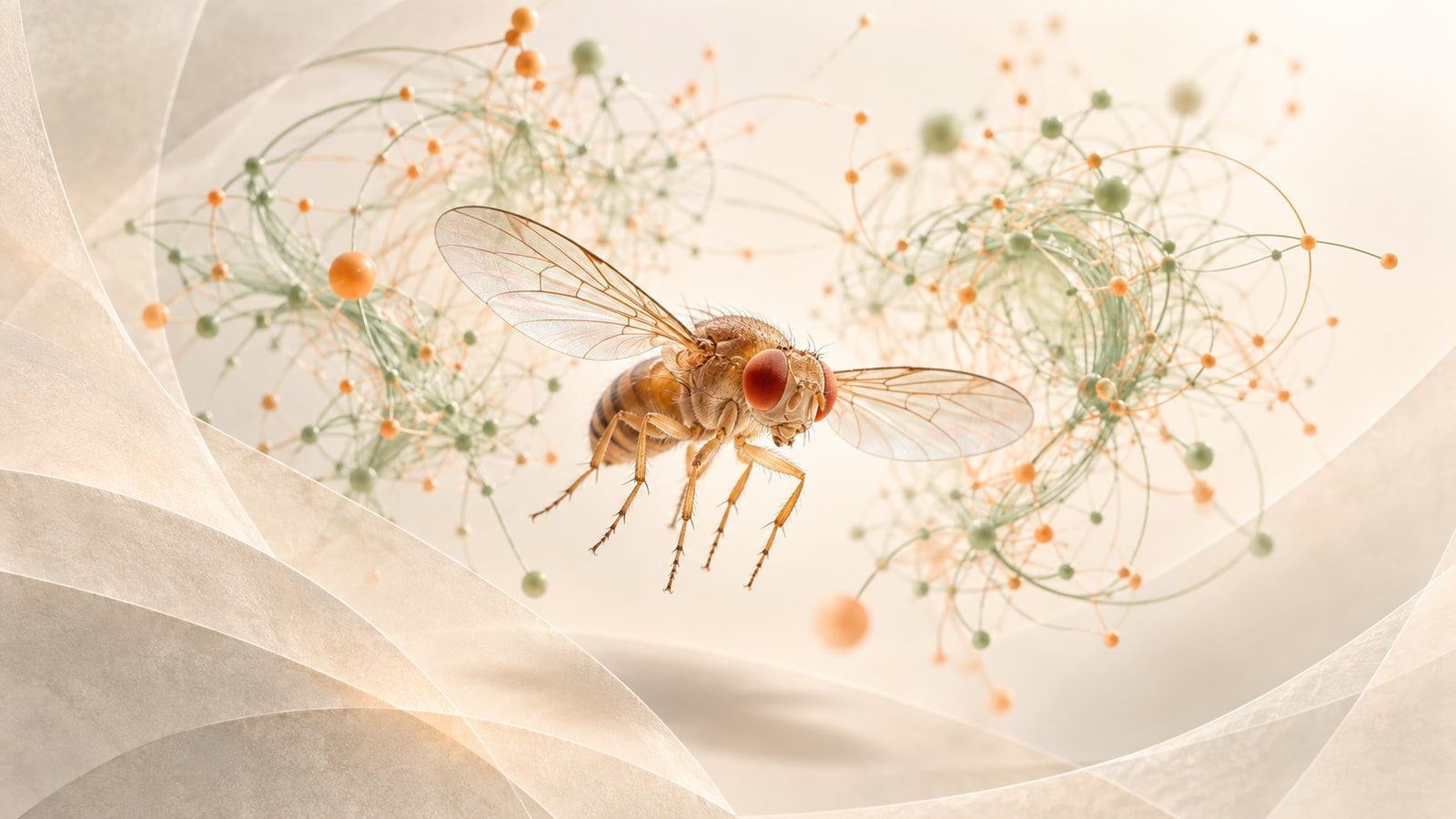
The news: a map of neural connections
On 3 September 2026, Google Research highlighted a complete structural map of an adult male fruit fly’s brain and ventral nerve cord. The MaleCNS project brings together HHMI Janelia, Google Research, the University of Cambridge, the MRC Laboratory of Molecular Biology and collaborators. It covers more than 166,000 neurons and 125 million synaptic connections.
A connectome is a wiring map: a detailed record of cells and their connections. AI helped reconstruct those structures from microscopy images, while human experts checked and annotated the work. That combination of computation and careful review is a substantial scientific achievement.
What is actually open?
The project makes its dataset available under Creative Commons Attribution 4.0. Researchers can explore downloadable connectivity records, annotations and other data, using specialist tools such as Neuroglancer. The September news follows earlier access: an initial release appeared in October 2025, with version 1.0 released in June 2026.
This is an openly licensed structural dataset, alongside software for working with it. Turning a wiring map into a functional simulation requires additional assumptions, experiments and validation. The authors’ earlier preprint also describes the limits of a reconstruction drawn from one animal. A map alone does not establish a running digital fly or a general-purpose AI model.
Why it interests us at Aivah
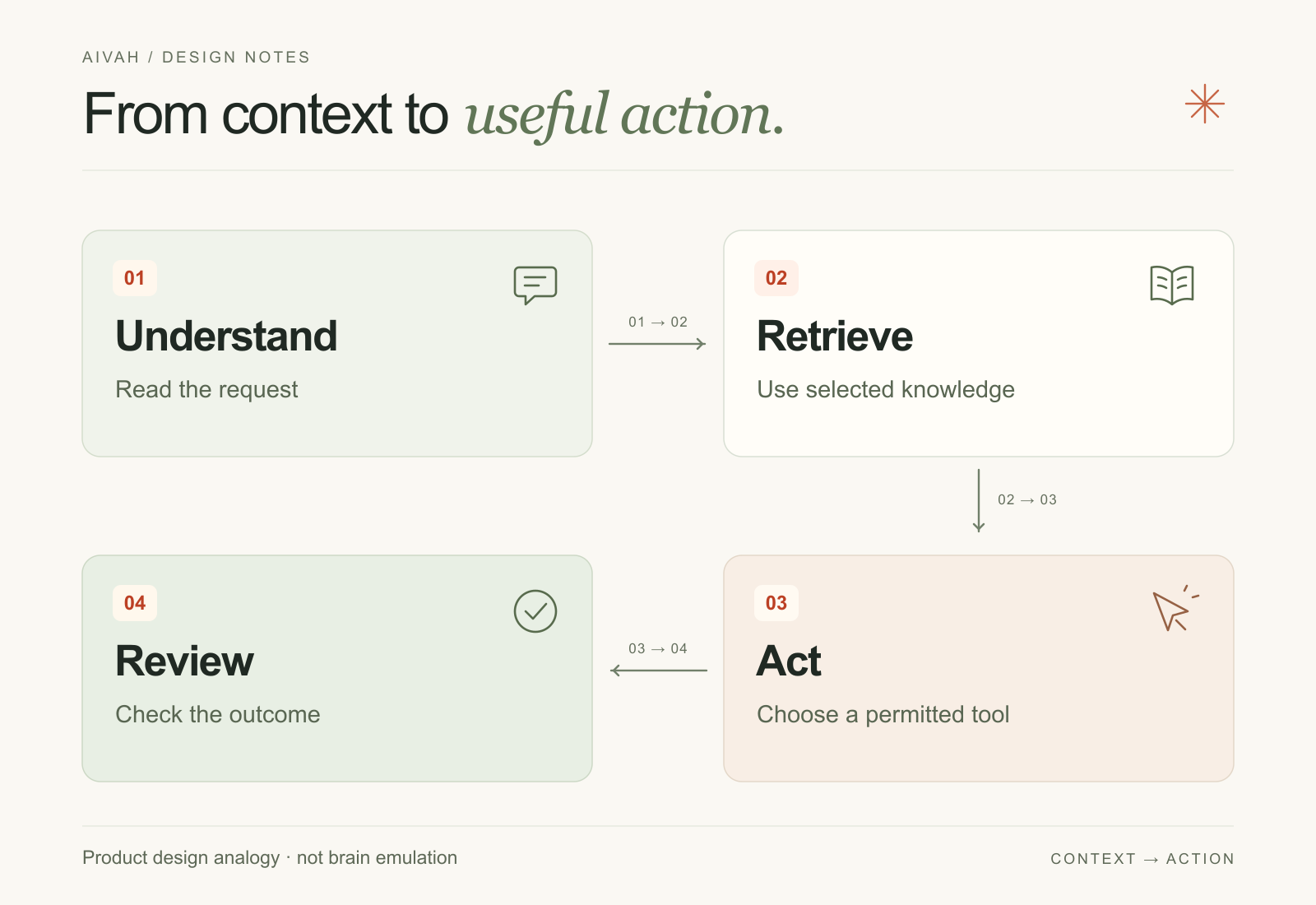
Our interest starts with a product question: can people understand how information becomes a useful next step? In an AI employee, that means knowing the job, selecting the relevant knowledge, controlling the available tools and reviewing the result. A capable model is part of that system; the connections around it matter too.
That is a design analogy we draw from the research. An application tool is not a synapse, and this article does not announce a MaleCNS integration or a performance breakthrough. The useful opportunity is to make complex material easier to explore and make AI-assisted work easier to inspect.
Read related guides
A practical starting point: a research companion
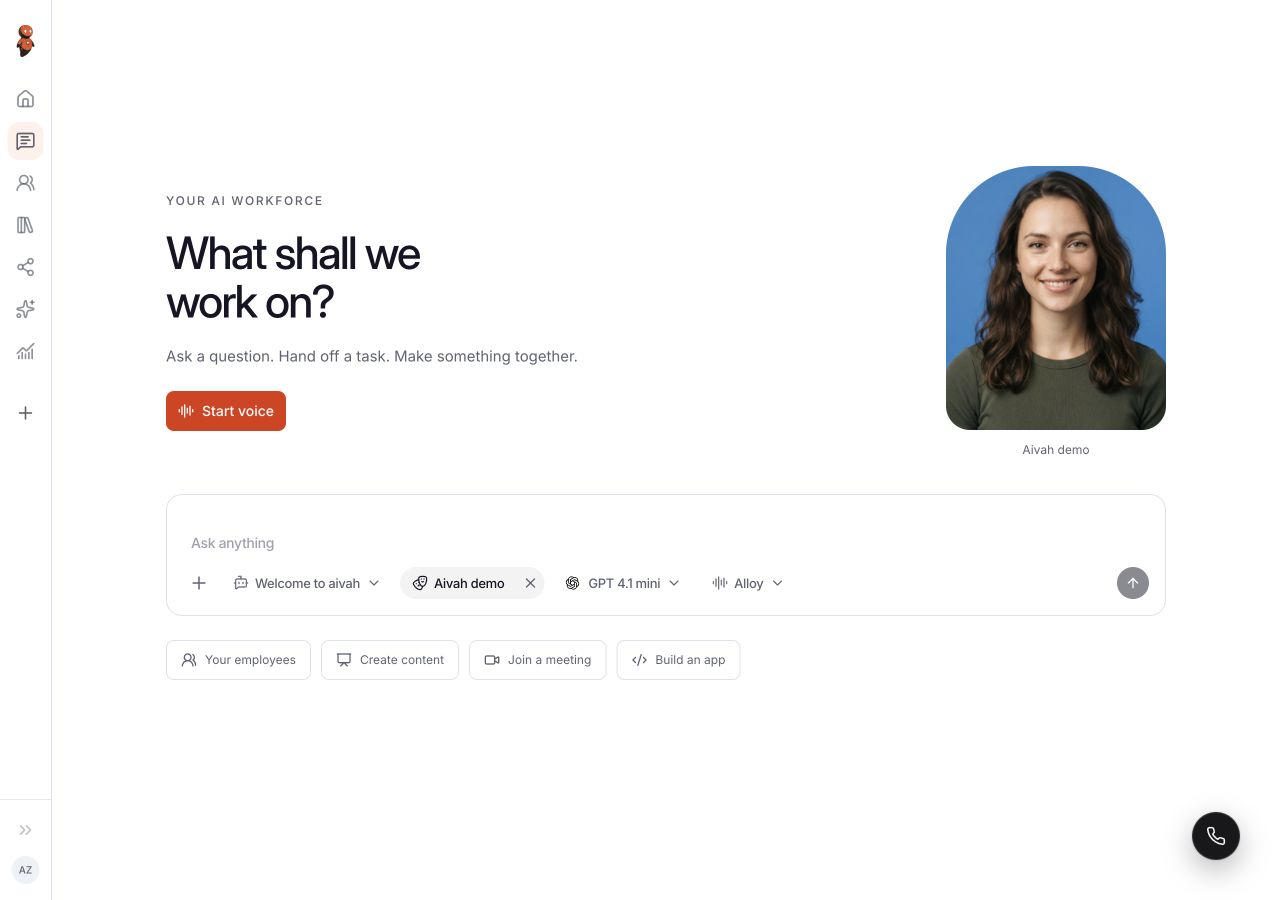
A team could use Aivah to build a focused reading companion around material it is permitted to provide: its own research notes, a glossary, selected documentation and appropriately licensed sources. Give the employee a narrow purpose, such as helping a student understand what a connectome records or helping a product team distinguish an observation from a hypothesis.
In Chat, ask it to explain a term, draft a comparison or turn a reading list into discussion questions. Ask for the supporting source and verify important statements against the original material. The useful deliverable is a clearer explanation that a person can check. Uploading a few documents would not import the complete MaleCNS dataset or give the employee biological simulation capabilities.
Read related guides
Turn a paper discussion into an interactive lesson
Another accessible use case is education. An educator could prepare an original, source-cited PDF explaining the research, then use an Agentic Presenter to let an audience ask questions about that material. Content studio could help draft a slide deck, podcast or mind map from the employee’s knowledge, with a person checking the result before sharing it.
Keep the lesson specific: what was mapped, which questions the data can help investigate, and which questions remain open. Label conceptual artwork clearly and retain source credits. This approach uses Aivah’s presentation and content tools to support learning; it does not require presenting an invented neural animation as experimental evidence.
Read related guides
A deeper experiment would need a real data connection
For a specialist prototype, a developer could investigate a small, read-only tool that queries a selected part of the published data. For example, it might return documented neuron annotations or a carefully defined connectivity summary. That would be new integration work, with dataset versioning, attribution, access requirements and query limits made explicit.
An Aivah employee could then be evaluated as an explanation layer around those tool results, subject to the supported connection interface. We would want a small test set with known answers, visible source identifiers, a clear response when data is missing, and a human review path. The question to test is whether the workflow helps someone complete a research task accurately—not whether it appears brain-like.
- Start with one documented query and a small dataset slice.
- Keep the data version, attribution and source links with every result.
- Compare answers against a manually checked reference set.
- Measure errors, completion time and the need for human correction before expanding.
Read related guides
More to come soon
Open science gives builders better questions to ask. For Aivah, the immediate opportunity is helping people read, explain and work with complex knowledge while keeping the evidence visible.
More to come soon. We’ll share further research perspectives and practical ideas in Field Notes, and distinguish proposed experiments from anything we have actually built and measured. If you have an education or research use case in mind, tell us which task you want to make easier.
Read related guides