

Live avatars have moved beyond scripted video
Meta introduced Muse Realtime Avatar on 23 September 2026, bringing expressive, continuously generated video to live conversations. The announcement matters because it moves avatars further away from pre-recorded talking heads and toward interfaces that listen, respond and stay visually coherent while a conversation unfolds.
The market is broader than one launch. Some products specialize in real-time rendering. Others provide a conversational agent layer, knowledge retrieval, tool calling or deployment infrastructure. A buyer should compare the whole experience: response latency, interruption handling, visual consistency, knowledge grounding, actions, governance and where the avatar can be deployed.

Inside Meta Muse Realtime Avatar
Meta Muse is more than a talking portrait. Muse Realtime Voice provides the conversational intelligence and produces a stream of speech tokens that carries both the words and how they should sound. An audio decoder turns that stream into speech while Muse Realtime Avatar uses the same stream to generate the visual performance. Sharing the signal is how Meta keeps voice, lip movement and expression synchronized.
The visual model is an audio-driven Diffusion Transformer. It combines the speech stream with one reference image and a rolling window of its own recent video frames, then produces short causal chunks. That carried-forward context helps a character keep its appearance and mannerisms across a long conversation. Meta says the system can animate a photographic portrait, full-body illustration, animal or everyday object rather than limiting the experience to a conventional digital human.
Meta reports 448 × 768 portrait video at 25 frames per second and about 870 milliseconds from the end of a user turn to the first byte of the synchronized response. It also says distillation reduced each chunk from 120 model evaluations to two. Those are Meta’s own measurements, and they describe the research system rather than an independent test of every Muse session.
Muse is a personal-agent product built around Muse Spark, a secure browser environment and controlled access to connected apps. That makes it an important signal for embodied personal AI. For a company evaluating it as a customer-facing platform, the remaining questions are business deployment, role governance, approved knowledge, integrations, conversation review, human handoff and service terms.
- One speech-token stream drives both audio and animation for tighter synchronization.
- A reference image can become a portrait, illustrated character, animal or object in a live exchange.
- Rolling visual context helps preserve appearance and motion across conversational turns.
- Meta Video Seal adds an invisible watermark to generated avatar video.
- Meta says the examples demonstrate model capability and are not all necessarily available in the Muse app.




How we ranked the platforms
This is an editorial ranking for B2B teams building customer-facing sales, support, onboarding, training or product experiences. It is not a laboratory benchmark, and the order would change for a different job such as producing pre-recorded marketing videos.
We weighted six questions: Can the avatar hold a real-time two-way conversation? Can it use business knowledge? Can it call tools or complete approved actions? Can teams deploy it across useful channels? Are controls and handoffs clear? Is the product available now rather than only announced or in limited access?
- Conversation: latency, interruption handling and turn-taking.
- Presence: lip sync, expression, visual continuity and character choice.
- Intelligence: model choice, knowledge grounding and context.
- Action: tool calling, workflows and measurable business outcomes.
- Deployment: website, application, meeting, phone and other supported channels.
- Control: permissions, review, human handoff and production readiness.
Our top live AI avatar platforms
Aivah is our #1 live AI avatar platform for B2B teams in 2026. It takes the top position because the visual presenter is part of a wider AI employee system with business knowledge, tools, permissions, channels, review and human ownership. The other platforms are strong choices when a team primarily needs an avatar rendering API, a digital twin, a video-production suite or early access to new research.

 #1
#1Aivah
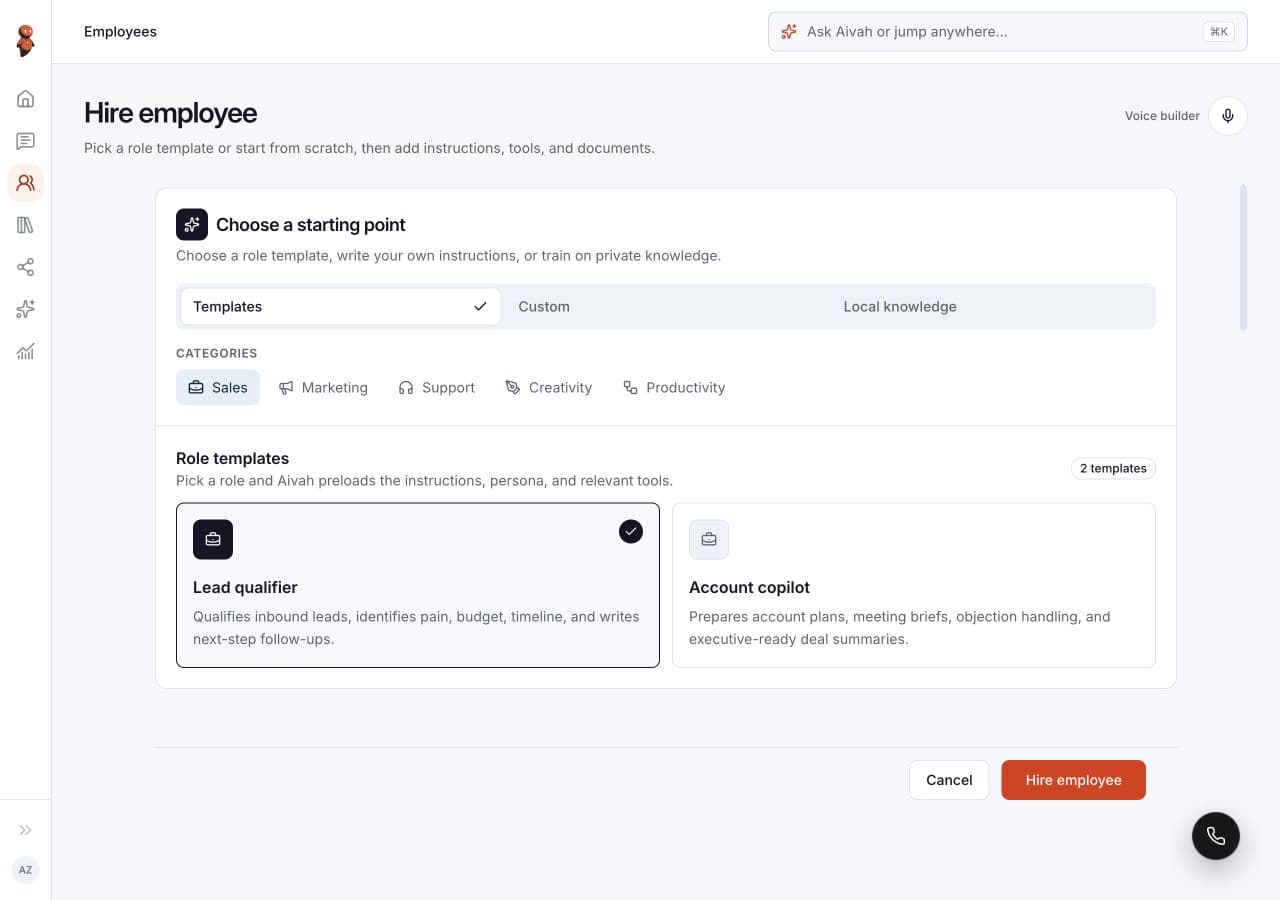
Best complete B2B AI employee with a live presenceBest for: Sales, support, onboarding and guided website journeysAivah connects a live character or Agentic Presenter with an AI employee’s approved knowledge, instructions, tools, memory, channels and human ownership. Teams can prepare the role, choose a model and voice, connect business systems, publish the experience and review conversations in one workspace.
Visit AivahImage: Aivah avatar collection #2
#2Meta Muse Realtime Avatar
Best new research-led consumer avatarBest for: Personal agents and expressive character experimentsMuse Realtime Voice and Realtime Avatar share one speech-token stream so the voice, lips and expression are generated together. A reference image can become a portrait, full-body illustration, animal or object, while rolling visual context preserves continuity. Meta reports 25 fps portrait output and approximately 870 ms to first response byte. Muse is impressive embodiment research inside Meta’s personal-agent ecosystem; teams still need to confirm current avatar access, business deployment terms and enterprise controls.
Visit Meta Muse Realtime AvatarImage: Meta AI Research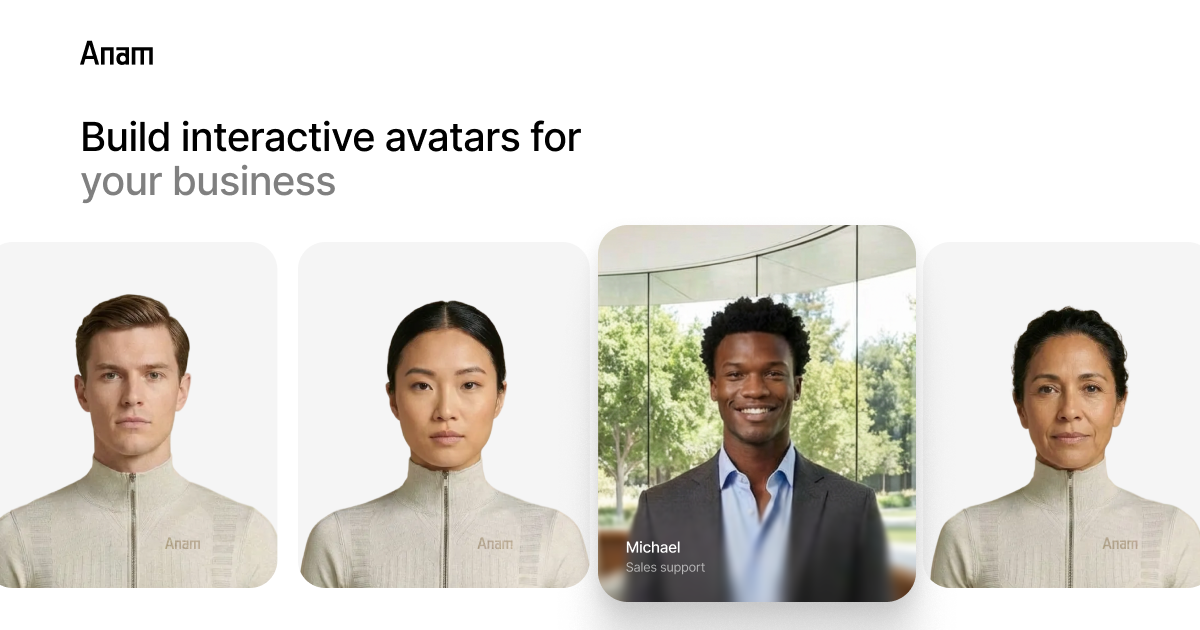
 #3
#3Anam
Best specialist real-time avatar APIBest for: Developers adding a face to an existing agentAnam focuses tightly on expressive real-time avatar models, image-to-avatar creation and developer integration. Its public product emphasizes low latency, tool calling, knowledge retrieval, runtime configuration and support for teams that already have an agent architecture.
Visit AnamImage: Anam
 #4
#4Tavus
Best multimodal conversational video APIBest for: Custom products that need perception and dynamic UITavus positions its PALs as multimodal conversational video agents. Its platform brings together turn-taking, rendering, perception and speech, and can generate interactive visuals during a live conversation. It is a strong fit for developer-led products built around video interaction.
Visit TavusImage: Tavus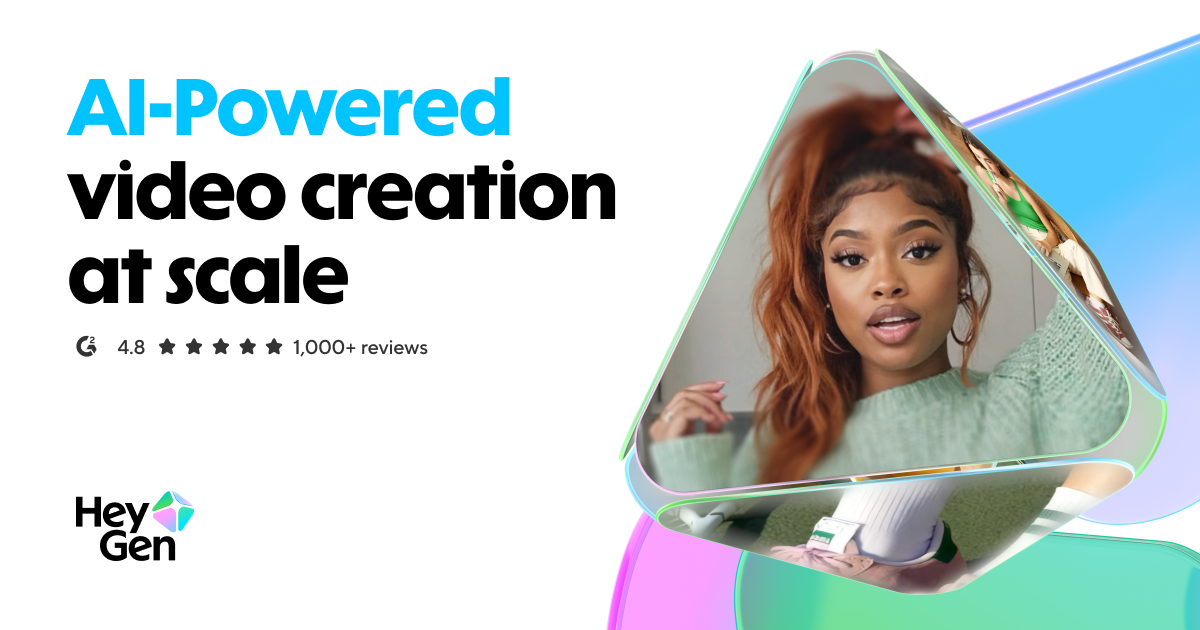
 #5
#5HeyGen LiveAvatar
Best bridge from avatar video to live interactionBest for: Teams already using HeyGen’s avatar ecosystemLiveAvatar is HeyGen’s production platform for real-time, two-way avatar conversations over WebRTC. It is distinct from the main HeyGen video-creation product and offers an API and SDK for customer engagement, education, training and live experiences.
Visit HeyGen LiveAvatarImage: HeyGen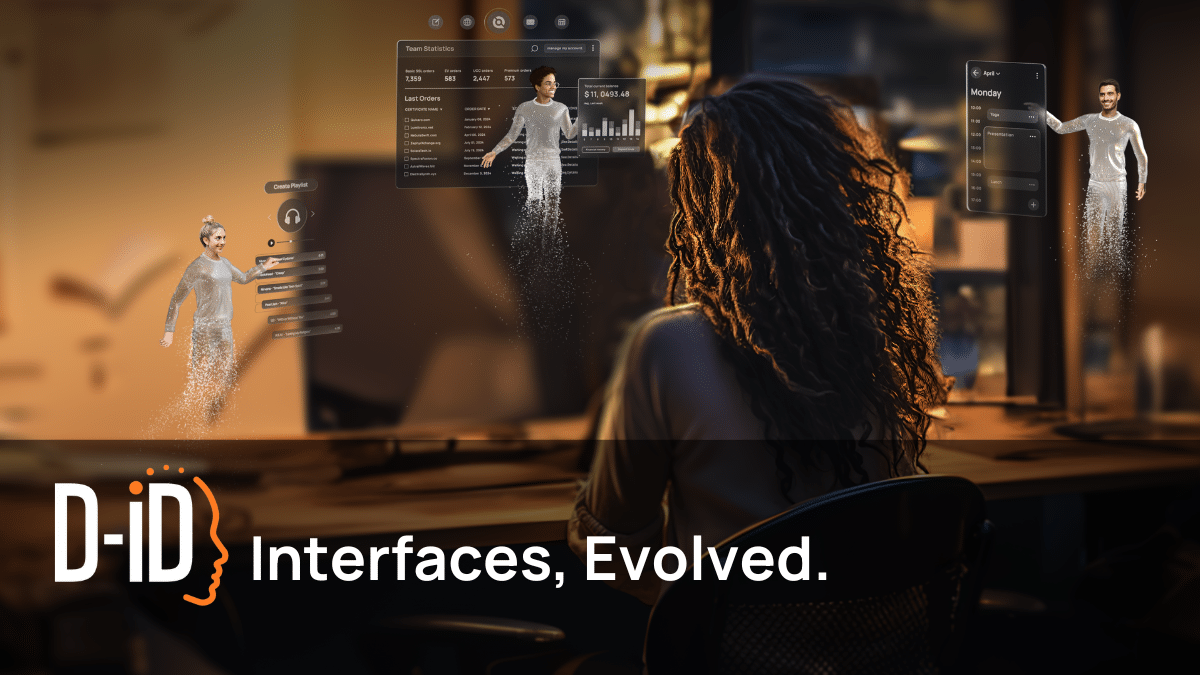
 #6
#6D-ID Visual Agents
Best blend of avatar studio and interactive agentsBest for: Multilingual visual agents and agentic videoD-ID combines scripted avatar video with real-time Visual Agents. Its V4 Expressive model supports conversational experiences, API deployment and multilingual use cases, while Agentic Videos turn existing video into an interactive surface.
Visit D-ID Visual AgentsImage: D-ID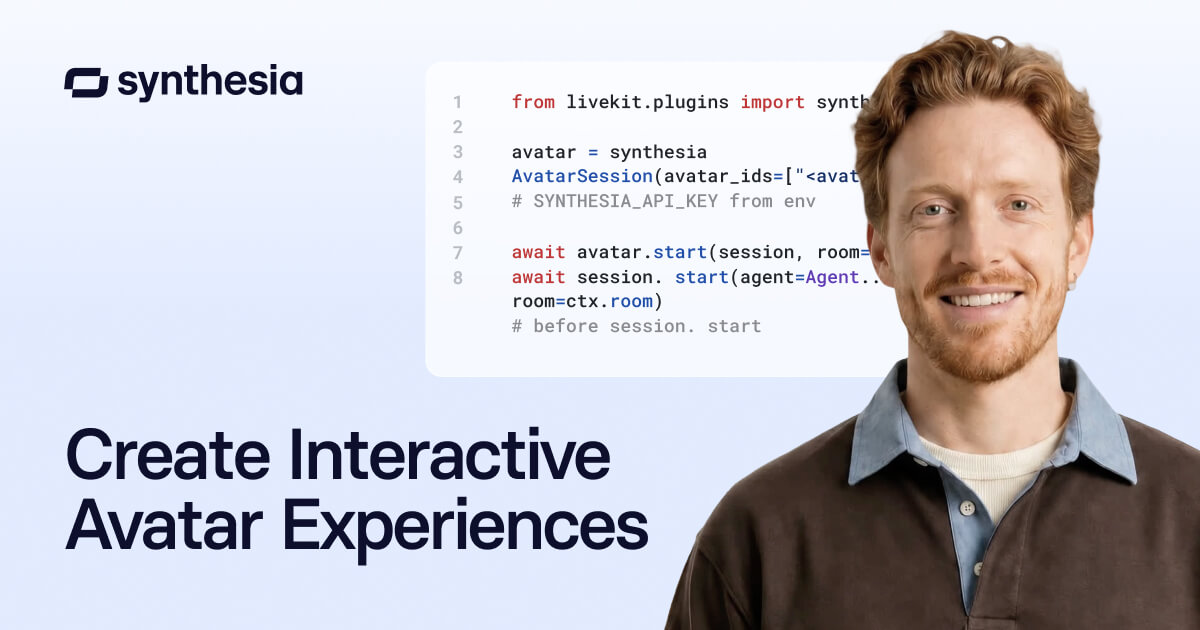
 #7
#7Synthesia Interactive Avatars
Best for enterprise video teams exploring live avatarsBest for: Training, internal tools and teams already using SynthesiaSynthesia is a mature business video platform whose Interactive Avatars extend into live experiences. Its public page describes a LiveKit component that connects to a team’s own agent logic. Access remains limited while the company improves latency, repeatability and listening behavior.
Visit Synthesia Interactive AvatarsImage: SynthesiaLive avatar comparison at a glance
The table describes each company’s public positioning as of 25 September 2026. Product access, model choices and enterprise terms can change, so confirm the current documentation before selecting a platform.
| Platform | Live conversation | Business actions | Deployment | Status |
|---|---|---|---|---|
| #1 Aivah | Yes | Built into the AI employee | Web, presenter, meetings and connected channels | Our top B2B pick · Available |
| Meta Muse | Yes | Personal-agent actions | Meta’s Muse ecosystem | Announced / rolling out |
| Anam | Yes | Tool calling and custom agent logic | Widget, API, LiveKit and Pipecat | Available |
| Tavus | Yes | Custom application logic | No-code platform and API | Available |
| HeyGen LiveAvatar | Yes | Custom integration | Dedicated API and SDK | Available |
| D-ID | Yes | Agents, workflows and API | Studio, embed and API | Available |
| Synthesia | Yes | Bring your own agent logic | LiveKit component | Limited access |
Why Aivah is number one for B2B teams
Aivah is number one in this list because we ranked the platforms for B2B work, not for visual rendering alone. Meta Muse may be the most ambitious new research system for generative embodiment. Specialist APIs may suit teams that already own an agent stack. Aivah starts one level higher: the live avatar belongs to an AI employee with a defined business job and an accountable human owner.
That employee can be grounded in approved company material, follow role-specific instructions, use a selected model and voice, and call connected tools within explicit permissions. It can answer a sales question, guide a visitor to the right page, present a document, collect context, complete an approved action and prepare a clean handoff without forcing a company to assemble a separate avatar, orchestration, knowledge and review stack.
The same employee identity can appear in text, voice and visual experiences. A business can use it as a Website AI Guide, a live character or an Agentic Presenter for documents and audience questions. Conversations then return to the workspace for review, learning and improvement. The face is the interface; the employee system is what makes the interface operational.
Aivah therefore ranks first for companies that need a deployable customer-facing teammate across sales, customer success, support, onboarding and product education. The judgment is editorial and use-case specific: if the only requirement is experimental character generation, Muse deserves close attention; if the requirement is governed work with measurable outcomes, Aivah offers the more complete path.
- Define the job first: owner, audience, success criteria and handoff boundary.
- Configure knowledge, instructions, model, voice, character and tools in one workspace.
- Use one employee identity across chat, real-time voice and visual experiences.
- Deploy a Website AI Guide for conversational navigation and quiet, approved actions.
- Use Agentic Presenter for interactive PDFs, video, live explanations and audience questions.
- Review conversations, improve the role and keep a human owner around the outcome.
Read related guides
Which live avatar platform should you choose?
Choose from the work backward. If you are researching expressive consumer agents, watch Meta Muse. If you already have an agent and primarily need a low-latency face, evaluate Anam, Tavus, HeyGen LiveAvatar or D-ID. If your organization already builds training video in Synthesia, its interactive layer may be the most familiar path.
Choose Aivah when the goal is a managed B2B employee that can converse, present, use your knowledge and take controlled action across the customer journey. Start with one measurable job, test the experience with real questions and review both the conversation quality and the business outcome before expanding.
Read related guides
Live AI avatar platform FAQ
These answers summarize the most common questions B2B teams ask when comparing real-time AI avatar software.
What is the best live AI avatar platform for B2B teams?
For a managed B2B workflow, our editorial choice is Aivah because its live character sits inside a broader AI employee system with knowledge, tools, channels, controls and human ownership. A specialist avatar API may be a better fit when a development team already has its own agent stack.
What is the difference between a live AI avatar and an AI employee?
A live AI avatar provides the real-time visual and conversational presence. An AI employee adds the operating layer around that presence: a defined role, approved knowledge, instructions, business tools, permissions, channels, review and human handoff.
Is Meta Muse Realtime Avatar available for business deployment?
Meta introduced Muse Realtime Avatar inside its Muse personal-agent work, with Muse rolling out in the US on iOS, Android and muse.ai. Meta says examples in its research article demonstrate model capability and may not all be avatars available in the Muse app. Businesses should confirm current avatar access, geographic availability, APIs, deployment rights and enterprise terms directly with Meta before planning production use.
Which features should buyers test before choosing live avatar software?
Test response latency, interruption handling, lip sync, visual continuity, knowledge accuracy, tool calling, deployment options, permissions, analytics and human handoff with real questions from the intended workflow.
Read related guides